
Zeremonieller Matcha
Uji, Japan
Uji is located south of Kyoto in Japan and is famous for producing the world's highest quality matcha. Fun fact: Uji has been cultivating tea for over 800 years and is considered the birthplace of Japanese matcha.
800 Jahre Matcha
Uji, Japan, known for producing the world's highest quality matcha, looks back on over 800 years of matcha history and offers ideal growing conditions with fertile soil and a favorable climate.
Qualitätskontrollen
Traditionelle Anbaumethoden und strenge Qualitätsprüfungen in Uji sichern das internationale Ansehen und die aussergewöhnliche Qualität des Matchas.
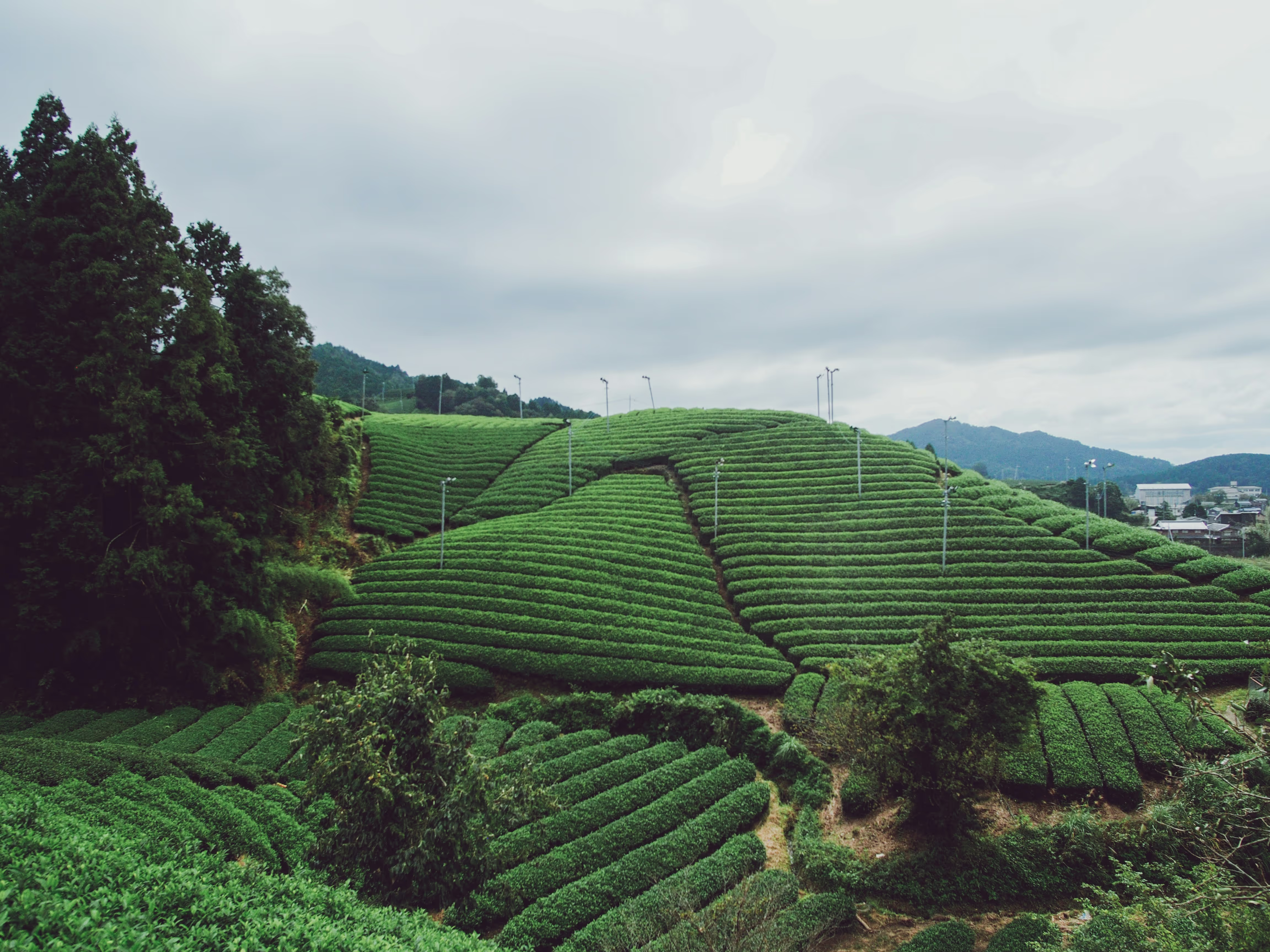
From a field in Uji -
straight into your cup

Shading and harvesting
A few weeks before harvest, our tea plants are shaded to promote chlorophyll and amino acids. In spring, only the youngest, most tender leaves of the first harvest are picked by hand.
Steaming & drying
Immediately after harvesting, the leaves are steamed to prevent oxidation and preserve the bright color and nutrient content. The leaves are then dried and sorted to remove stalks, leaving only the pure “tencha”.


Stone milling
The dried tencha leaves are ground into a fine powder using traditional stone mills, which ensures that our matcha is particularly fine and smooth.
Your new daily ritual
After all this painstaking work, your matcha has finally made it into your cup. How lucky you are to have the best quality matcha right at your fingertips!

L-theanine
L-theanine is an amino acid that is only found in tea plants and certain types of mushrooms.
It can promote relaxation without making you sleepy and is therefore useful for reducing stress and anxiety.
When combined with caffeine, as found in matcha, L-theanine can improve cognitive performance and concentration. This combination can lead to a calm yet alert state of mind, often referred to as 'wakeful calm'.

Caffeine
Matcha contains caffeine, which can help increase alertness. However, the caffeine content in matcha is balanced by L-theanine, resulting in a more stable and longer-lasting energy boost without the jitters and crash often associated with coffee.

Fiber
Matcha is made from whole tea leaves that are ground into a fine powder so that the fiber content of the leaves is preserved. Fiber is important for digestive health and helps to regulate the digestive system and maintain gut health.

No additives
or added sugar
Our Matcha is slightly sweet without tasting bitter - without any additives or sugar, just pure Matcha.


Perfect Matcha Latte. Every time.
Prepare a Matcha Latte in less than 2 minutes - no complicated machines required.

Any questions?
Matcha contains caffeine, with one serving containing roughly the same amount as an espresso. If you’re sensitive to caffeine, start with half a serving (1g) and drink your matcha earlier in the day.
Morning to early afternoon. Caffeine stays in your body for several hours, so it’s best to have your last serving 6 to 8 hours before going to bed. For late afternoons and evenings, that’s what our Hojicha is for.
Keep it airtight and protected from light. The resealable pouch is designed exactly for that. Matcha tastes best within 3 months of opening. If you need longer, store it in the fridge, not the freezer.
The highest quality grade: young leaves from the first spring harvest, shaded for four weeks and stone-ground using granite mills. Later harvests in summer and autumn tend to be more bitter and are used for lower grades. Our matcha is exclusively ceremonial grade.
Because we work directly with a producer family in Uji and only source the first spring harvest. Organic-certified and freshly ground. The same matcha is served in specialty cafés across Switzerland.