
How to tell good matcha
Good matcha is a strong, bright green and whisks into a fine, dense foam. Straight, it tastes smooth and naturally a little sweet with little bitterness, and the pack states harvest and origin along with a best-before date.
What colour is good matcha?
A strong, bright green. The duller or more yellowish the powder, the more likely it comes from a later harvest or is already old.
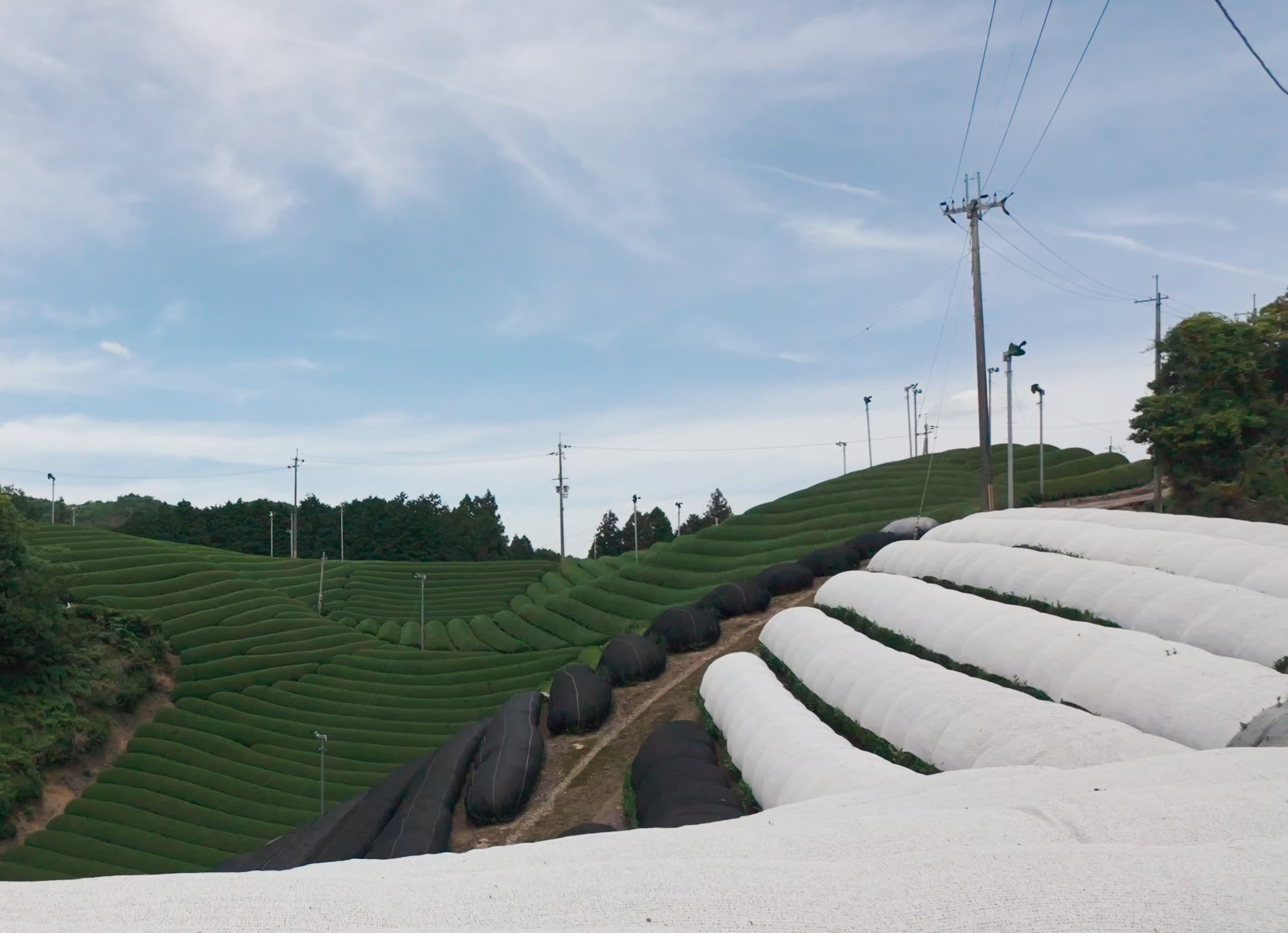
The colour comes from chlorophyll. Shading before harvest raises the chlorophyll content of the leaves. In a lab analysis of 25 matcha products, the most expensive samples contained more than three times as much chlorophyll as the cheapest. In the cheap samples, more than half of the chlorophyll had already broken down into pheophytin, an olive-brown pigment. In the expensive ones it was less than 30 percent.
Storage shows in the colour too. A Korean study found that matcha loses brightness and green tone the warmer and longer it is stored.
What should matcha smell like?
Fresh and green, slightly sweet. If it smells flat or like the fridge, it has lost aroma or picked up other smells.
Smell is a good first test because you don't have to prepare anything. Open the pack and smell the powder directly.
How should good matcha feel?
Very fine and silky, like face powder. Rub a little between two fingers. It should not feel gritty, and it clings lightly to the skin.
Small clumps are not a bad sign. Very finely ground matcha clumps more easily because the tiny particles stick together. Japanese researchers found that stone-milled matcha carries an electrostatic charge and flows less freely than powder from other mills.
How does foam show good matcha?
Good matcha quickly forms a fine, dense foam with small bubbles when whisked. Weak matcha barely foams, and its bubbles are large and collapse fast.
According to a Japanese study, the foam forms because dissolved compounds in the matcha bind with the fine powder particles. The dissolved compounds also help the foam stay stable.
What does good matcha taste like?
Smooth and naturally a little sweet, with clear umami. Bitterness stays in the background. A slight astringency is normal, since matcha is a green tea. But it should not taste harsh or strongly bitter.
Taste depends on what is in the leaf. Catechins taste bitter and astringent. Theanine is an amino acid that shapes the umami taste. In the same lab analysis, the most expensive samples contained more than twice as much theanine as the cheapest.
If your matcha tastes bitter, the cause is often preparation, not the powder. The most common reasons are in Why does my matcha taste bitter?
| Sign | Good sign | Warning sign |
|---|---|---|
| Colour | Strong, bright green | Olive or yellowish |
| Smell | Fresh and green | Flat or musty |
| Texture | Silky fine, clings to fingers | Gritty, sandy |
| Foam | Fine and dense, holds well | Large bubbles, collapses fast |
| Taste | Smooth, with umami | Harsh, strongly bitter |
| Pack | Harvest and region, with date | Only “premium” or “ceremonial” |
What should the pack tell you?
The more a seller discloses, the easier it is to compare. These details are a good sign:
- Harvest: for example first spring harvest (ichibancha), ideally with the year.
- Origin: a region such as Uji, not just “Japan”.
- Best-before date: so you can see how fresh the matcha is.
- Organic certification: with the certification body's code, in Switzerland for example CH-BIO-006.
Terms like “ceremonial” or “premium”, on the other hand, are not regulated. What “ceremonial” does and doesn't mean is explained in What does ceremonial grade really mean?
What does the price tell you?
Compare the price per gram, not per pack. 30g for CHF 30 is CHF 1 per gram. 100g for CHF 30 is CHF 0.30 per gram. At 2g per serving, that is CHF 2 versus CHF 0.60 per cup.
In the lab analysis, price and quality were clearly linked, but not always. One expensive product scored lower on chlorophyll and amino acids than other matcha at a similar price. So price is a hint, not proof.
To be fair: for baking or desserts you don't need expensive matcha. There, a cheaper matcha from later harvests is often the more sensible choice.
How do you test matcha at home?
This is how to compare two matchas side by side:
- Spread a pinch of each powder next to each other on white paper and compare the colour in daylight.
- Smell both packs and rub a little powder between your fingers.
- Moisten the bamboo whisk (chasen) briefly in warm water.
- Put 2g matcha in a matcha bowl (chawan) and add 40ml water at no more than 80°C.
- Whisk for 10 to 15 seconds in a zigzag, an M or W motion, until a fine, dense foam forms.
- Look at the colour of the whisked matcha and at how long the foam lasts.
- Taste both straight, before adding any milk.
For a fair comparison, prepare both with the same amount and the same water temperature. How to keep matcha fresh after opening is covered in How to store matcha.
How we run this test at matcha⁷
Exactly like this. Our certified organic matcha comes from the first spring harvest in Uji and is ground on granite stone mills. Every pack carries a best-before date, one year from sealing.
If you want to run the test yourself, the Matcha Discovery Set includes a 30g tin and a bamboo whisk. The full method is in our preparation guide.
FAQ
Is lighter or darker matcha better?
What matters is not light or dark but a bright, vivid green. Olive or yellowish tones point to later harvests or old matcha.
Why doesn't my matcha foam?
Common reasons are too much water or whisking too briefly. Lower quality matcha also foams poorly. With 2g matcha in 40ml water and 10 to 15 seconds of zigzag whisking, good matcha forms a fine foam.
Are clumps in matcha a bad sign?
No. Very finely ground matcha clumps easily because the fine particles stick together. They usually break up when you whisk.
How much does good matcha cost per gram?
That depends largely on harvest and origin. Always compare the price per gram, and at 2g per serving work out the price per cup too.
Do I need good matcha for baking?
No. For baking and desserts, a cheaper matcha from later harvests usually works well.
- Horie, H. et al. (2018): Comparison of the Chemical Components of Powdered Green Tea Sold in the US. JARQ 52(2), 143 to 147
- Kim, J.-M. et al. (2020), Food Science and Biotechnology 29(9), 1261 to 1271: effect of storage temperature on matcha colour and catechin stability
- Sawamura, S. et al. (2009): Flowability Properties of Matcha Varying with Particle Size and Milling Method. Nippon Shokuhin Kagaku Kogaku Kaishi 56(2), 103
- Sawamura, S. et al. (2012): Foaming Property and Foam Diameter of Matcha Varies with Particle Size. Nippon Shokuhin Kagaku Kogaku Kaishi 59(3), 109 to 114
- Zhang, L. et al. (2020): Association between chemistry and taste of tea: A review. Trends in Food Science and Technology 101, 139 to 149
- Chen, X. et al. (2022): Effect of Shading on the Morphological, Physiological, and Biochemical Characteristics as Well as the Transcriptome of Matcha Green Tea. Int. J. Mol. Sci. 23(22), 14169
- Bioaktuell / FiBL: Kennzeichnung nach Bio-Verordnung (Code der Zertifizierungsstelle, z. B. CH-BIO-006)