
Why has matcha become more expensive?
Matcha has become more expensive because its raw material, tencha, averaged 8,562 yen per kilo in Japan in 2025, more than double the year before and the fifth annual rise in a row. Global demand has surged, while supply cannot keep pace, partly because of heat and a shrinking farm workforce.
How much more does the raw material cost?
Matcha’s raw material is tencha: the shaded, steamed and dried tea leaves that matcha is ground from. When the tencha price rises, matcha gets more expensive.
In 2025, tencha in Japan averaged 8,562 yen per kilo. That is more than double the year before. According to the Japanese Association of Tea Production, it was the fifth annual rise in a row. Japan’s Ministry of Agriculture (MAFF) reports the same figure.
Tencha from the first spring harvest (ichibancha) averaged 10,030 yen per kilo in 2025. Sencha, the classic Japanese leaf green tea, averaged 1,746 yen. That made tencha about 4.9 times as expensive.
Prices kept rising in 2026. At Kyoto’s first tencha market in May 2026, machine-harvested tencha averaged 13,972 yen per kilo, about 1.7 times the year before. The Global Japanese Tea Association reported this, citing Japanese press reports. According to MAFF, the 2026 first spring harvest traded at about double the previous year’s price in Kagoshima and about 70% higher in Shizuoka.
| Figure | Value | Year | Source |
|---|---|---|---|
| Tencha, average across all harvests | 8,562 yen per kilo, more than double the year before | 2025 | MAFF, Jiji Press |
| Tencha, first spring harvest | 10,030 yen per kilo | 2025 | MAFF |
| Sencha, average across all harvests | 1,746 yen per kilo | 2025 | MAFF |
| First tencha market in Kyoto | 8,235 yen per kilo, a record (previous high 2016: 4,862 yen) | May 2025 | Reuters |
| First tencha market in Kyoto, machine-harvested | 13,972 yen per kilo, about 1.7 times the 2025 level | May 2026 | GJTEA |
| Tencha production in Japan | about 3.2 times the 2014 level | 2025 | MAFF |
| Japan’s green tea exports | 72.1 billion yen, a record | 2025 | MAFF |
| Tea farm workforce | 7,726 (2010: 28,116), 63% aged over 65 | 2025 | MAFF |
| Exchange rate | 1 Swiss franc = about 192 yen (October 2021: about 124) | October 2026 | fxfeed.io |
Why has demand grown so much?
Matcha is in demand worldwide, above all as a matcha latte in cafés and on social media. In September 2025, the Associated Press reported on a US importer who paid about 75% more for the top grade of the 2025 harvest than the year before.
Japan’s green tea exports hit a record 72.1 billion yen in 2025. Powdered tea, which includes matcha, made up 69% of the volume and 84% of the value. According to the Yomiuri Shimbun newspaper, the United States took more than 30% of exports.
Demand is holding. From January to August 2026, Japan exported green tea worth 67.4 billion yen according to MAFF, more than in the same period of 2025.
Why doesn’t Japan simply produce more tencha?
Japan already produces much more: about 3.2 times as much tencha in 2025 as in 2014. Even so, tencha makes up only 8.6% of Japan’s total unrefined tea output.
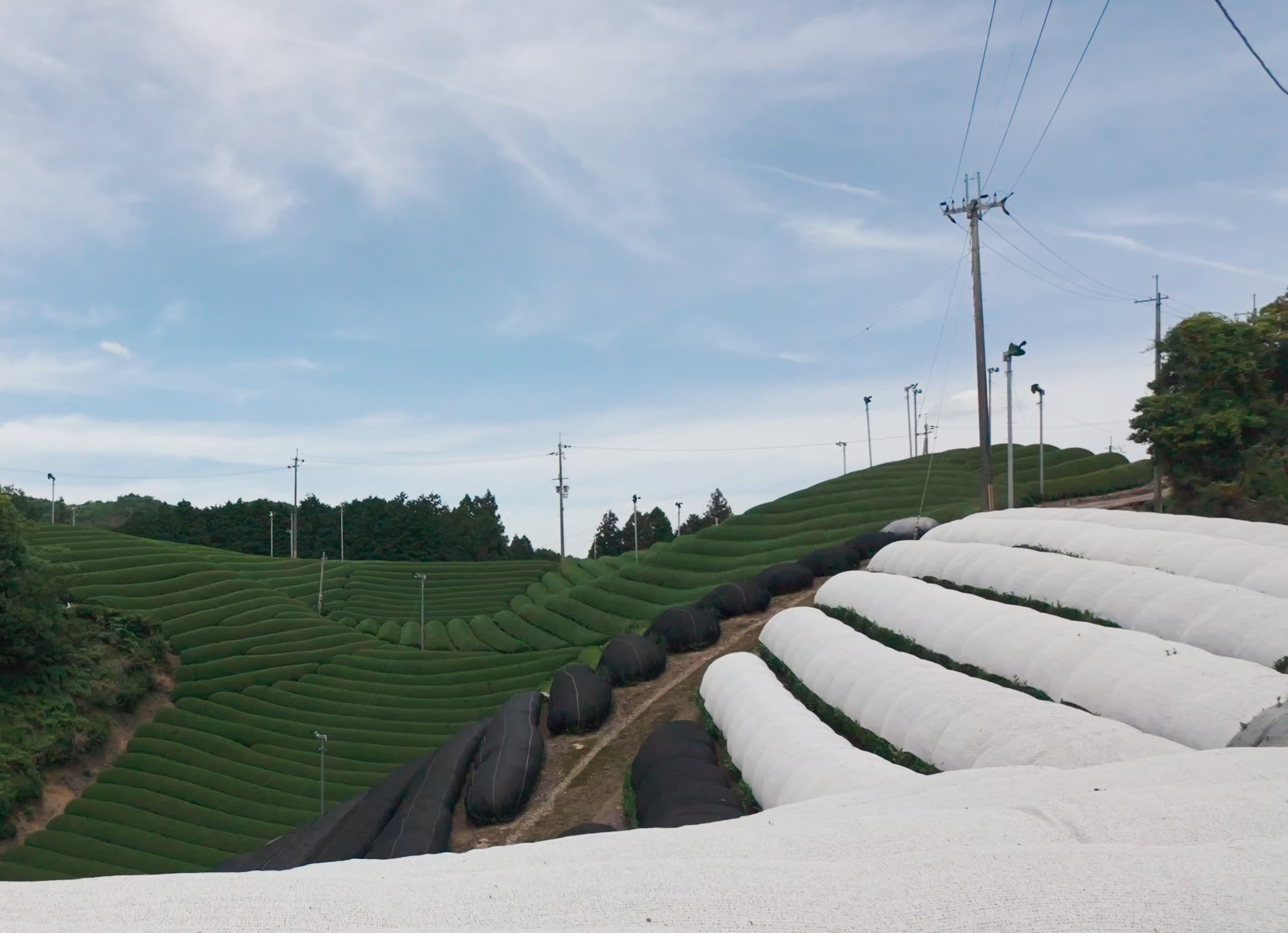
Tencha needs its own processing. The tea bushes are shaded before harvest. After picking, the leaves are steamed and dried, then separated from stems and veins. The full process is explained in How matcha is made.
New tea fields take about five years to reach their first harvest. So supply responds slowly to higher demand.
Labour is short as well. The number of people working mainly in tea farming in Japan fell from 28,116 in 2010 to 7,726 in 2025. Over the same period, the share aged over 65 rose from 55% to 63%.
Many farms are also hesitant to switch from sencha to tencha. According to AP, they worry that the boom will fade. Farms that do switch produce less sencha, which is why sencha prices in Japan are now rising too.
What role does the weather play?
2024 was Japan’s hottest year on record. According to Reuters, the summer heat weakened the tea bushes, and the 2025 spring harvest was smaller as a result. AP also reported a weather-reduced harvest.
At Kyoto’s first tencha market in May 2025, the average price was 8,235 yen per kilo. That was a record; the previous high, set in 2016, was 4,862 yen. The weakened harvest met a sharp rise in demand.
What do US tariffs have to do with it?
In 2025, the United States imposed a 15% tariff on imports from Japan, tea included. AP named this as a further price factor for American buyers.
Since 13 November 2025, tea has been exempt from these tariffs (Executive Order 14360). They never applied to matcha coming into Switzerland; they only affected imports into the US.
What does this mean for buyers in Switzerland?
The strong Swiss franc softens the rise a little. In October 2021, one franc bought about 124 yen; in October 2026, about 192 yen. But the tencha price more than doubled in 2025 alone. That is far more than the currency effect.
Per serving, matcha stays manageable. At CHF 8 per 10g, a 2g serving costs CHF 1.60.
What helps when buying:
- Compare the price per 10g, not the pack price. How to do that is explained in Buying matcha in Switzerland.
- When prices change, look at the harvest and origin details. If the description gets vaguer, take a second look.
- For baking, matcha from a later harvest is enough. It costs less, and in a cake the difference is hard to notice.
- Buy only what you will use within about three months of opening. A large stock loses freshness.
We buy our matcha directly from a producer family in Uji. Our prices follow theirs. The quality stays the same: organic matcha from the first spring harvest, certified organic under CH-BIO-006.
FAQ
Will matcha get cheaper again?
Nobody can say for sure. New tea fields take about five years to reach their first harvest, so supply responds with a delay, and exports up to August 2026 were above the previous year.
Is it worth stocking up on matcha now?
Not really. Opened matcha is best within about three months, so a large stock loses freshness.
Why is matcha so much more expensive than sencha?
Tencha is shaded before harvest and processed separately before it is ground into matcha. In 2025, unrefined tencha cost about 4.9 times as much as sencha.
Do US tariffs apply to matcha in Switzerland?
No. The tariffs only affected imports into the US, and tea has been exempt there since 13 November 2025.
Is more expensive matcha always better?
No. Price also follows the raw material market. Harvest and origin details, plus a foam test at home, tell you more.
- MAFF (Japanese Ministry of Agriculture, Forestry and Fisheries): Cha wo meguru jousei, October 2026 (PDF, Japanese)
- Jiji Press via The Nation: Matcha demand more than doubles the price of raw material in Japan (4 September 2026)
- Associated Press via Fortune: Matcha prices soar due to global demand (16 September 2025)
- Associated Press via Anchorage Daily News: How much for matcha? (September 2025)
- Reuters via GMA News: Japan's heat-stressed matcha tea output struggles to meet soaring global demand (4 July 2025)
- Global Japanese Tea Association: Japanese Tea Report, May 2026
- Yomiuri Shimbun via Asia News Network: Matcha boom still simmering, but record-high exports bring Japanese tea farmers challenges (2 June 2026)
- The American Presidency Project: Executive Order 14360, Modifying the Scope of the Reciprocal Tariff With Respect to Certain Agricultural Products (14 November 2025)
- Thompson Hine: Executive order exempting agricultural products, including tea, from reciprocal tariffs (November 2025)
- fxfeed.io: CHF/JPY exchange rate history