
Matcha vs. coffee: how much caffeine is in a cup?
A serving of matcha made with 2g of powder contains roughly 40 to 90mg of caffeine, as published analyses measure 19 to 44mg per gram. EFSA puts an espresso (60ml) at about 80mg and a cup of filter coffee (200ml) at about 90mg.
How much caffeine does matcha contain?
Matcha is a ground tea leaf. You drink the whole leaf, not just an infusion. So the caffeine depends directly on how much powder you use.
A 2020 review summarises published analyses: matcha contains 18.9 to 44.4mg of caffeine per gram. The official Japanese food composition table uses 3.2g of caffeine per 100g of matcha, which is 32mg per gram.
For our standard serving of 2g, that means roughly 40 to 90mg of caffeine. Using the Japanese table value, it would be about 64mg.
The range is wide because caffeine content varies from tea to tea. Only a lab analysis of a specific batch gives an exact figure for that pack. For how matcha compares with regular green tea, see Matcha vs. sencha.
How much caffeine does coffee contain?
The European Food Safety Authority (EFSA) gives these reference values:
- Espresso (60ml): about 80mg
- Filter coffee (200ml): about 90mg
- For comparison, black tea (220ml): about 50mg
These are averages too. Depending on the bean and the amount of ground coffee, a cup can be well above or below them.
| Drink | Serving | Caffeine | Basis |
|---|---|---|---|
| Matcha | 2g powder, 40ml water | approx. 40 to 90mg | Analyses: 19 to 44mg per gram |
| Matcha latte | 2g matcha, 120ml milk | approx. 40 to 90mg | Same as matcha, milk has no caffeine |
| Espresso | 60ml | approx. 80mg | EFSA |
| Filter coffee | 200ml | approx. 90mg | EFSA |
| Black tea | 220ml | approx. 50mg | EFSA |
In short, a serving of matcha usually sits a little below a cup of coffee or roughly level with it. Milk contains no caffeine, so adding it for a latte does not change the amount.
How much caffeine a day is considered safe?
In 2015, EFSA assessed which intake levels raise no safety concerns for adults in the general population:
- up to 200mg at one time, which is about 3mg per kilogram of body weight
- up to 400mg per day, spread over the day
- up to 200mg per day during pregnancy and breastfeeding
All sources count together, including cola or chocolate. EFSA also notes that in some adults, around 100mg shortly before bedtime may affect sleep.
A 2g serving of matcha, at around 90mg at most, stays well below the single amount of 200mg.
Why don't we make claims about effects?
Many articles online say matcha affects you differently from coffee. In Switzerland, no such claim is authorised, neither for matcha nor for components such as L-theanine.
L-theanine is an amino acid in tea that shapes its umami taste. That is a statement about taste. So we only compare what can be measured or tasted.
How do production and taste differ?
Coffee is made from the roasted seeds of the coffee plant. Hot water extracts aroma and caffeine from the ground coffee, and the grounds stay behind.
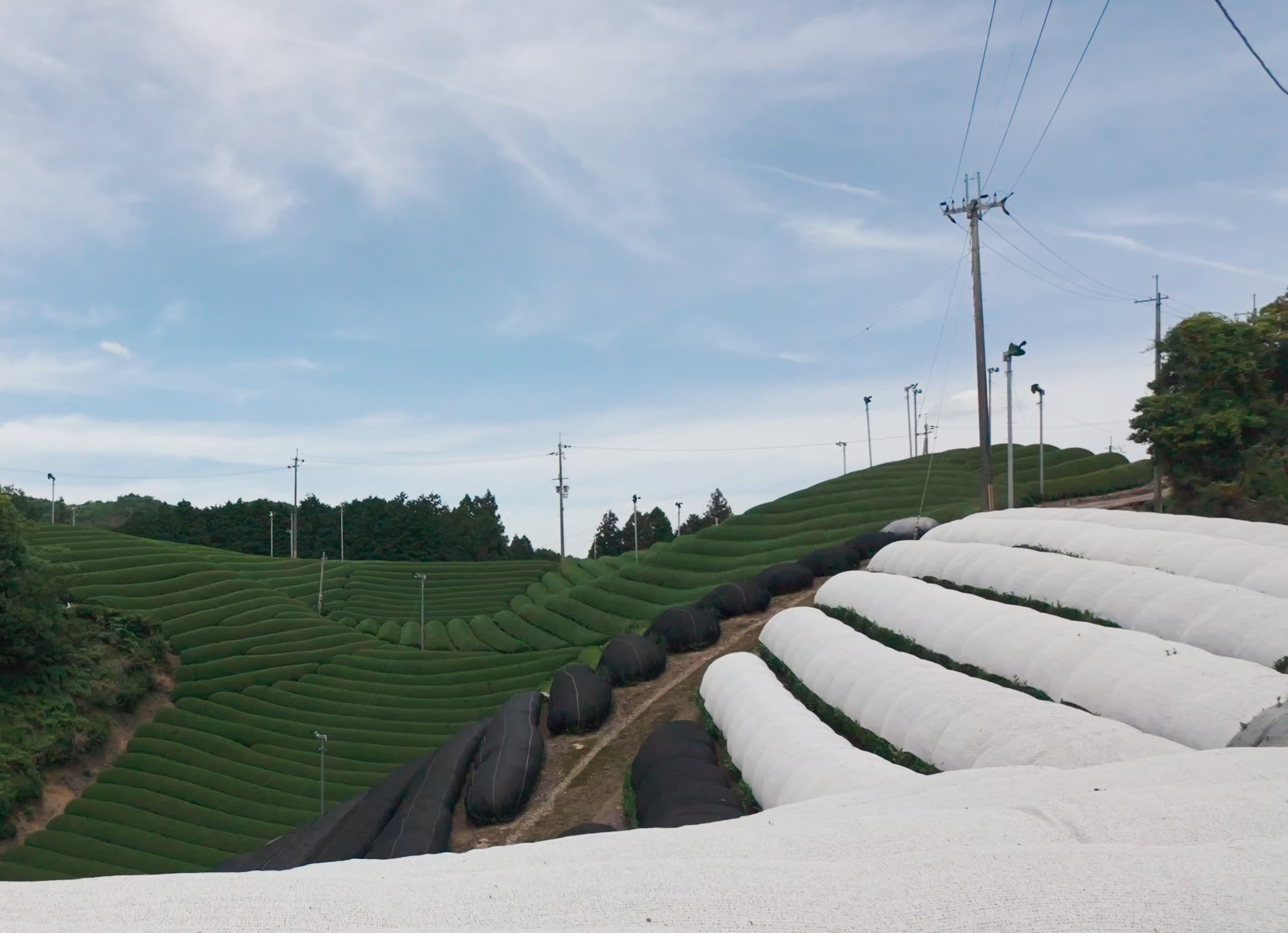
Matcha is made from tencha: the shaded, steamed and dried tea leaves that matcha is ground from. The powder is not filtered out but whisked into the water.
Coffee tastes mainly of roast, with acidity and bitterness depending on the bean. Good matcha tastes smooth and naturally a little sweet, with umami and little bitterness. For how matcha differs from roasted green tea, read Matcha vs. hojicha.
How long does it take to prepare?
For matcha you need a matcha bowl (chawan) and a bamboo whisk (chasen). The water should be no hotter than 80°C.
- Moisten the bamboo whisk briefly in warm water.
- Put 2g of matcha in the bowl and add 40ml of water.
- Whisk for 10 to 15 seconds in a zigzag (an M or W motion) until a fine, dense foam forms.
Most of the time goes into heating the water. An espresso runs through in around 25 seconds depending on the machine, while filter coffee takes longer. The full guide, including lattes and iced matcha, is on our preparation page.
What does a serving cost?
- Matcha at home: with our organic matcha in the 60g pouch at CHF 49.90, a 2g serving costs about CHF 1.66.
- Coffee at home: at roughly 7g of ground coffee per single espresso, a kilo of beans makes about 140 cups. Divide your price per kilo by 140 to get your price per cup.
- In a café: a café crème cost CHF 4.65 on average in German-speaking Switzerland in 2025. A matcha latte usually costs around CHF 7.50 on Swiss menus.
To be fair: per cup, coffee at home is almost always cheaper than good matcha. Part of the reason is the raw material. In Japan in 2025, tencha cost almost five times as much as sencha, the everyday Japanese green tea, at the raw tea stage.
FAQ
Does matcha have more caffeine than coffee?
Per serving, usually not. 2g of matcha contains roughly 40 to 90mg of caffeine, while EFSA puts an espresso (60ml) at about 80mg and a cup of filter coffee (200ml) at about 90mg.
How much caffeine is in a matcha latte?
The same as the matcha in it, so roughly 40 to 90mg for 2g. Milk contains no caffeine.
How many cups of matcha a day are considered safe?
According to EFSA, up to 400mg of caffeine per day from all sources raises no safety concerns for adults in the general population, and up to 200mg during pregnancy and breastfeeding. How many cups of matcha that allows depends on the matcha and on your other caffeine sources.
Can I drink matcha in the evening?
Matcha contains caffeine, much like coffee. According to EFSA, around 100mg shortly before bedtime may affect sleep in some adults.
Why do matcha packs rarely state an exact caffeine content?
Caffeine varies from tea to tea, and published analyses measure 19 to 44mg per gram. Only a lab analysis of the specific batch gives an exact value.
- EFSA: Caffeine (topic page with safety levels and caffeine per serving)
- Kochman J. et al. (2020), Molecules 26(1):85, review of the chemical composition of matcha green tea (caffeine 18.9 to 44.4mg/g)
- Food Safety Commission of Japan: Factsheet caffeine (values from the Standard Tables of Food Composition in Japan 2015: matcha 3.2g/100g)
- MAFF Japan: Cha wo meguru josei, October 2026 edition (raw tea prices 2025: tencha 8,562 yen/kg, sencha 1,746 yen/kg)
- blue News / Keystone-SDA (24.11.2025): Cup of coffee at the resti is getting more expensive again (CafetierSuisse: café crème CHF 4.65)
- Apiletti, D. et al. (2020), Politecnico di Torino: Evaluating espresso coffee quality by means of time-series feature engineering, EDBT/ICDT 2020 Workshops (cites the Istituto Nazionale Espresso Italiano certified espresso: 7g ground coffee, about 25 seconds extraction)
- Verordnung des EDI betreffend die Information über Lebensmittel (LIV, SR 817.022.16), Art. 31 bis 35 und Anhang 14
- Zhu W. et al. (2023): Shading effects revisited, Beverage Plant Research 3:5 (theanine linked to umami)