
Matcha vs. hojicha: what is the difference?
Matcha and hojicha come from the same tea plant: matcha is ground from shaded, steamed leaves and stays green, while hojicha is roasted and turns brown. Matcha tastes of umami, hojicha tastes roasted and nutty and usually contains a little less caffeine.
What is hojicha?
Hojicha is roasted green tea. The name comes from the Japanese word for roasting. The leaves come from the same tea plant as matcha, Camellia sinensis.
So matcha and hojicha are related, but not the same. Matcha stays green because the leaves are only steamed and dried. Hojicha is roasted after drying, which turns it brown.
How are they made differently?
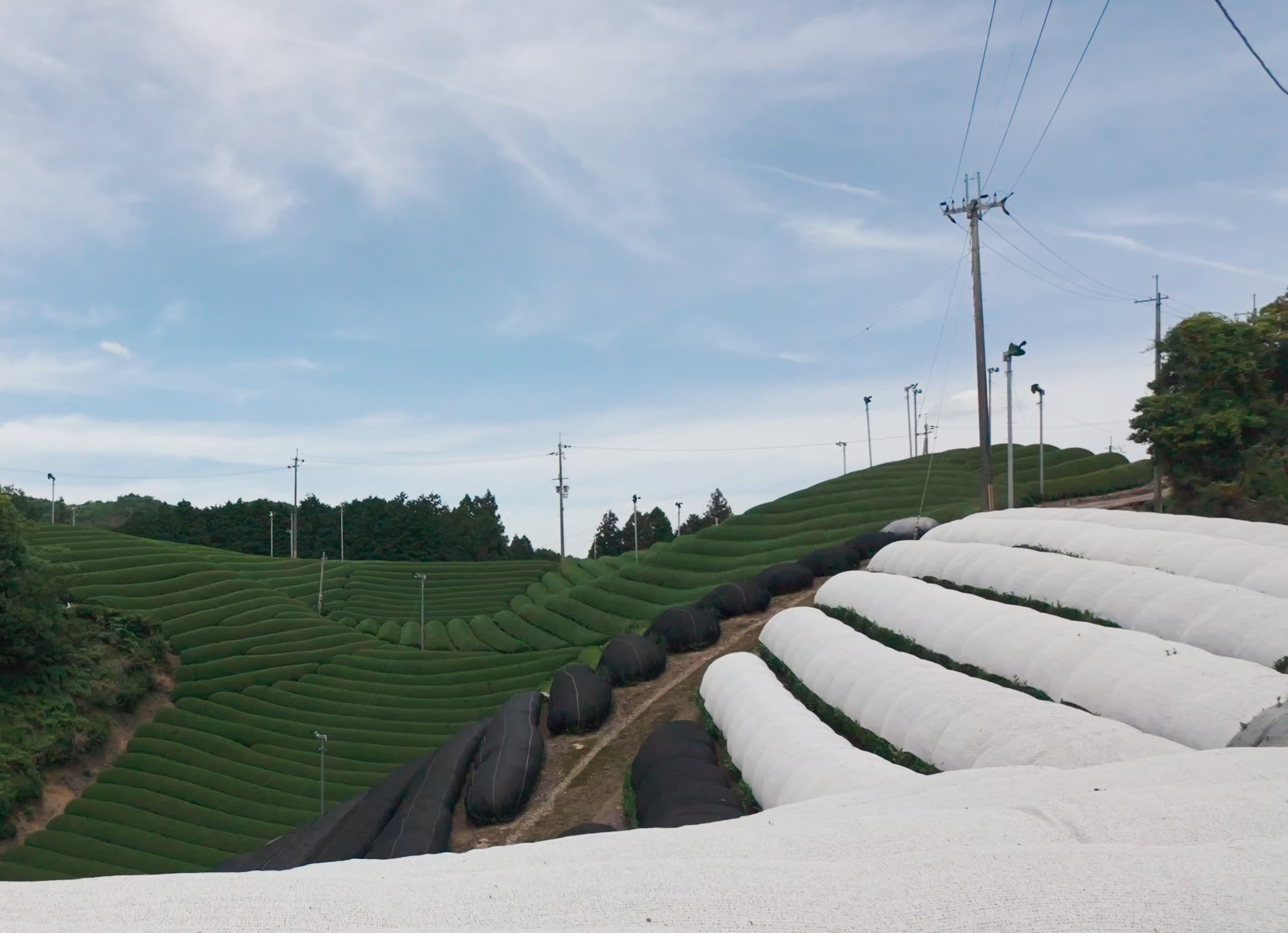
For matcha, the tea bushes are shaded for a few weeks before harvest. The young leaves are steamed, dried without rolling, stripped of stems and veins and ground on stone mills. The details are in How is matcha made?
For hojicha, dried green tea leaves are roasted at high heat. Depending on the producer, the leaves come from the first or from later harvests, and stems are sometimes roasted too. For hojicha powder, the roasted leaves are then ground.
Why is hojicha brown?
Heat breaks down the green chlorophyll, much like with cooked vegetables. At the same time, roasting triggers browning reactions, the same kind that colour bread crust or coffee.
In a Japanese roasting study on tea stems, roasted at 180 to 220°C, the colour shifted from yellow-green to reddish brown as the heat increased. That is exactly the shade of hojicha: reddish brown instead of green.
How do matcha and hojicha taste?
Matcha tastes of umami and is slightly sweet. Depending on quality, there is some bitterness too. The umami comes mainly from theanine, an amino acid that stays in the leaf thanks to shading.
Hojicha tastes roasted and nutty, often with hazelnut notes. The same roasting study shows why: roasting sharply reduces catechins and theanine, the compounds behind bitterness and umami. Roasted aromas form instead, including compounds called pyrazines.
That is why hojicha tastes hardly bitter, but also less of umami. People who find matcha too grassy often prefer hojicha, and the other way round.
| Feature | Matcha | Hojicha |
|---|---|---|
| Processing | Shaded, steamed, dried, ground | Green tea, roasted at high heat |
| Colour | Bright green | Reddish brown |
| Taste | Umami, slightly sweet | Roasted and nutty |
| Caffeine | About 64mg per 2g of powder | Usually a little less, depending on leaf and roast |
| Preparation | 2g, 40ml, max. 80°C | 2g, 40ml, max. 80°C |
| Best served | Hot or iced | Hot |
Does hojicha have less caffeine than matcha?
Usually a little less, but hojicha is not caffeine-free. And the difference is smaller than the brown colour suggests.
First, the figures from Japan's official food composition tables, as cited by the Japanese Ministry of Agriculture. Matcha powder contains 3.2g of caffeine per 100g, so a 2g serving has about 64mg. Brewed hojicha contains 20mg per 100ml, the same as brewed sencha, Japan's everyday green tea. With a brew, though, you only drink the water, not the whole leaf.
With ground hojicha, you drink the whole leaf, just as with matcha. It still usually contains less caffeine, for two reasons:
- Roasting: In two studies supported by the Japanese Ministry of Agriculture, roasting lowered caffeine by 12 and 17 percent on average. The results varied widely. Some samples lost up to half, a few even contained slightly more after roasting.
- The leaf: In studies, older leaves from later harvests contain less caffeine than young first-harvest leaves. Shading, as used for matcha, increased caffeine in a 2022 study.
We don't have our own lab value for our hojicha, so we don't give a fixed number here. How matcha compares with coffee is in Matcha vs. coffee.
How do you prepare hojicha?
Hojicha powder is prepared exactly like matcha:
- Put 2g of hojicha into a bowl.
- Add 40ml of water at no more than 80°C.
- Whisk with the moistened bamboo whisk (chasen) for 10 to 15 seconds in a zigzag.
Drink it pure or as a latte with 80 to 120ml of foamed (oat) milk. Hojicha tastes best hot. Iced, it can taste a little astringent. Matcha uses the same base, hot or iced. The full guide is on our preparation page.
When to drink which?
- Matcha: if you like umami and a bright green colour. Pure or as a latte, hot or iced.
- Hojicha: if you like roasted, nutty flavours. Best hot, pure or as a latte, especially in the colder months.
If you keep an eye on your caffeine intake, hojicha is usually the option with a little less. It is not caffeine-free, though.
Our matcha and hojicha
Our hojicha is a medium-roasted powder from the second harvest, from the same fields as our matcha from Uji. Both are certified organic, and you can try them side by side in the Matcha & Hojicha Duo.
FAQ
Does hojicha have less caffeine than matcha?
Usually a little less, because roasting breaks down part of the caffeine and some hojicha is made from older leaves that contain less caffeine. But hojicha is not caffeine-free.
Is hojicha the same as matcha?
No. Both come from the same tea plant. Matcha is steamed and stays green, hojicha is roasted and turns brown.
Can you prepare hojicha like matcha?
Yes, hojicha powder is prepared the same way: 2g into a bowl, add 40ml of water at no more than 80°C and whisk with a bamboo whisk.
Why does hojicha taste hardly bitter?
Roasting sharply reduces the catechins that make tea bitter. Roasted aromas form instead.
Should you drink hojicha hot or iced?
It tastes best hot, pure or as a latte. Iced, it can taste a little astringent.
- MAFF (Japanese Ministry of Agriculture): caffeine in food, matcha 3.2g/100g, hojicha and sencha infusion 20mg/100ml (Standard Tables of Food Composition in Japan 2020), EFSA summary
- Japan Tea Central Association: FY2023 MAFF-subsidised hojicha testing report, caffeine before and after roasting (average minus 12 percent, range minus 42 to plus 14 percent) and raw material by harvest (first flush most common, also second flush, later flushes and autumn-winter bancha), PDF
- Japan Tea Export Promotion Council: FY2022 MAFF-subsidised hojicha testing report, caffeine before and after roasting (average minus 17 percent, range 0 to 50 percent) and raw material by harvest, PDF
- Sasaki et al. (2020), Effects of roasting conditions on appearance, aroma and taste components of roasted stem tea (roasted at 180 to 220°C on tea manufacturers' advice), Food Science and Technology Research 26(5):643
- Song et al. (2010), Catechin and caffeine concentration variations in Jeju green tea harvested over a seven-month period, Preventive Nutrition and Food Science 15(3):229
- Maeda-Yamamoto et al., changes in tea constituents by leaf maturity, caffeine lower in mature leaves, Food Science and Technology Research 10(2):186
- Chen et al. (2022), Effect of shading on matcha green tea, International Journal of Molecular Sciences 23(22):14169
- Atlas of Science: heat turns chlorophyll into olive-brown pheophytins (Delpino-Rius et al. 2018)