
Matcha vs. sencha: how do the two green teas differ?
Matcha and sencha come from the same tea plant but are grown and processed differently. Matcha is shaded before harvest and ground into powder, so you drink the whole leaf, while sencha grows in the sun and is drunk as an infusion.
What is the difference between matcha and sencha?
Both are Japanese green teas from the same tea plant. The difference starts in the field and ends in the cup.
Sencha is a leaf tea. You steep the leaves, drink the infusion, and the leaves stay behind. Matcha is a powder made from the whole leaf, which you whisk into water and drink completely.
Sencha is also by far the most common tea in Japan. According to the Japanese agriculture ministry, it made up 48.1 percent of raw tea production in 2025. Tencha accounted for 8.6 percent. These are the shaded, steamed and dried tea leaves that matcha is ground from.
| Feature | Matcha | Sencha |
|---|---|---|
| Growing | shaded before harvest | in full sun |
| Processing | steamed, dried flat, de-stemmed, ground | steamed, rolled while drying |
| What you drink | the whole leaf as powder | the infusion |
| Caffeine per serving | approx. 40 to 90mg (2g) | approx. 30mg (150ml) |
| Water | 40ml, max. 80°C | approx. 70 to 90°C |
| Preparation | whisk for 10 to 15 seconds | steep for approx. 1.5 minutes |
| Raw tea price in Japan, 2025 | 8,562 yen per kg | 1,746 yen per kg |
How are matcha and sencha grown?
Sencha grows in full sun until harvest.
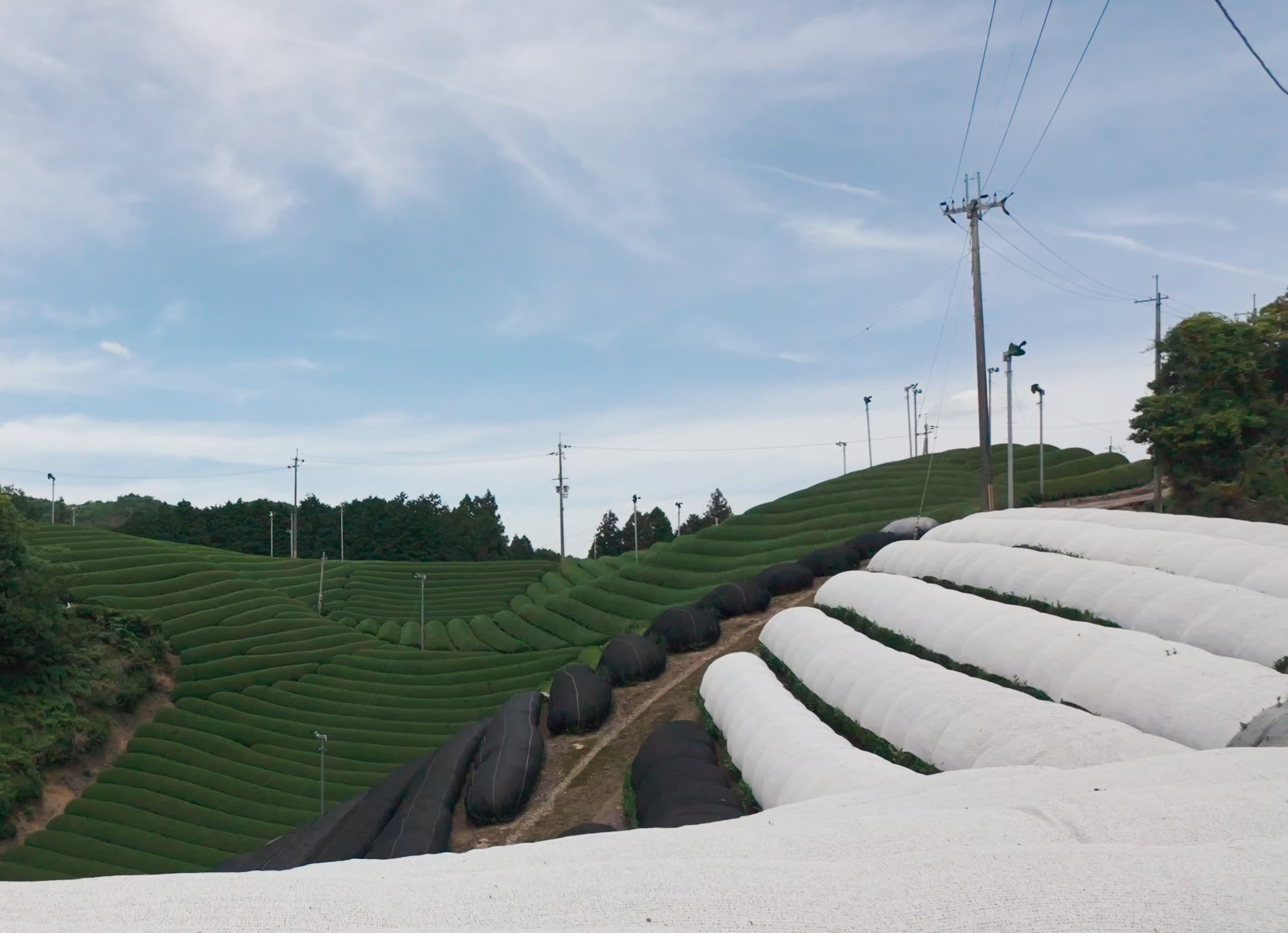
For matcha, the tea plants are covered before harvest. In Japan, tencha is usually shaded for about as long as gyokuro, a shaded leaf tea, which is around 20 days or more. Our matcha is shaded for about 4 weeks.
Shading changes the leaves. Studies show that shading usually lowers the catechin content of the leaves. Catechins are the compounds mainly responsible for bitterness and astringency in tea. The balance shifts towards amino acids, which include L-theanine. L-theanine contributes to the umami taste.
How are the leaves processed?
Both teas are steamed after harvest to keep the leaves green. After that, they go separate ways:
- Sencha: the leaves are rolled while they dry. This creates the typical dark green needles.
- Matcha: the leaves are dried flat, without rolling. Stems and veins are removed. The result is tencha. Only then is it milled into a fine powder.
We explain each step in detail in How matcha is made.
Does matcha have more caffeine than sencha?
Per serving, usually yes. The main reason is that with matcha you drink the whole leaf.
- Matcha: published analyses measure 18.9 to 44.4mg of caffeine per gram. A 2g serving therefore contains roughly 40 to 90mg.
- Sencha: the Japanese food composition table lists 20mg per 100ml for the infusion. A 150ml cup therefore contains about 30mg.
In the dry leaf, the gap is smaller. For green tea in general, the same review gives 11.3 to 24.7mg per gram. But when you steep the leaves, only part of it ends up in the water.
A leaf tea can still deliver a lot of caffeine. Gyokuro is brewed with a lot of leaf in little water and reaches 160mg per 100ml in the Japanese table. For how matcha compares with coffee, see Matcha vs. coffee.
How do taste and colour differ?
Sencha tastes fresh and grassy, with umami and noticeable astringency. Depending on the harvest and steeping time, it is mild or quite brisk.
Good matcha tastes fuller because you drink the whole leaf. It is smooth and naturally a little sweet, with umami and little bitterness. The powder is a vivid green.
You can see the difference too. A sencha infusion is clear. Matcha is opaque with a fine layer of foam, because the powder is suspended in the water.
Is ground sencha the same as matcha?
No. Green tea powder made from sencha comes from leaves that grew in the sun and were rolled. Matcha is ground from tencha.
Since 2022, ISO/TR 21380, a technical report by the International Organization for Standardization, has described matcha by its plant source, cultivation and production. It is not binding. So it is worth checking the ingredients and origin details.
For baking, inexpensive green tea powder can be perfectly fine. For pure matcha or a latte with fine foam, it is no substitute.
How do you prepare matcha and sencha?
Sencha
The Japanese agriculture ministry recommends 2 to 3g of leaves per 100ml of water. Use water at about 70°C for high-quality sencha and about 90°C for everyday grades. Steep for around 1.5 minutes. A second infusion with slightly hotter water needs only about 45 seconds.
Matcha
- Moisten the bamboo whisk (chasen) briefly in warm water.
- Put 2g of matcha in a matcha bowl (chawan) and add 40ml of water at no more than 80°C.
- Whisk for 10 to 15 seconds in a zigzag until a fine, dense foam forms.
Drink it pure or as a latte with 80 to 120ml of (oat) milk. The full guide is on our preparation page.
Why is matcha more expensive than sencha?
The raw material alone costs far more. In 2025, the average price of tencha in Japan was 8,562 yen per kilo, compared with 1,746 yen for sencha. That is almost five times as much.
Then there are the extra steps. The fields are covered before harvest. After drying, the leaves are de-stemmed and milled into powder.
Which tea for what?
- For a pot with a meal or to sip through the day, sencha is the cheaper and perfectly good choice. The leaves can be steeped a second time.
- For a latte or a bowl with foam, you need matcha. Sencha cannot do that.
If you want to whisk matcha yourself for the first time, our Matcha Discovery Set contains our 30g tin and a bamboo whisk.
FAQ
Is matcha a green tea?
Yes. Matcha is a Japanese green tea from the same plant as sencha. It is shaded before harvest and ground from tencha, so you drink the whole leaf.
Does matcha have more caffeine than sencha?
Per serving, usually yes. 2g of matcha contains roughly 40 to 90mg of caffeine, while a 150ml cup of sencha contains about 30mg according to Japanese table values.
Can I grind sencha and use it like matcha?
Ground sencha is green tea powder, but not matcha, because the leaves grew in the sun and were processed differently. It can work for baking, but not for pure matcha or a latte.
What water temperature should I use for sencha?
The Japanese agriculture ministry recommends about 70°C for high-quality sencha and about 90°C for everyday grades, with around 1.5 minutes of steeping. Matcha is whisked with water at no more than 80°C.
Why does matcha cost more than sencha?
In 2025, tencha, the raw material for matcha, cost almost five times as much as sencha in Japan on average. The extra work, from shading to milling, adds to that.
- MAFF Japan: Cha wo meguru josei, October 2026 edition (raw tea production shares 2025: sencha 48.1%, tencha 8.6%; prices: tencha 8,562 yen/kg, sencha 1,746 yen/kg)
- Nippon.com: Japan's many varieties of green tea (sencha unshaded; gyokuro shaded about 20 days; tencha grown like gyokuro, dried without rolling, stems and veins removed, ground)
- Kochman J. et al. (2020), Molecules 26(1):85, review of the chemical composition of matcha green tea (caffeine: green teas 11.3 to 24.67mg/g, matcha 18.9 to 44.4mg/g)
- Food Safety Commission of Japan: Factsheet caffeine (Standard Tables of Food Composition in Japan 2015: sencha infusion 20mg/100ml, gyokuro 160mg/100ml)
- Zhu W. et al. (2023): Shading effects revisited, Beverage Plant Research 3:5 (shading reduces catechins; catechins and bitterness, theanine and umami)
- MAFF Japan: How to brew Japanese tea (English manual: sencha 2 to 3g per 100ml, 70°C or 90°C, 1.5 minutes)
- ISO/TR 21380:2022 Matcha tea: Definition and characteristics